

The game Cash or Crash Live creates its own niche in the live game show world. Its appeal is found in a strong combination of stage show and game rules that transforms every round into a test of your nerves. This isn’t just a spin of a roulette table. In this game, you are in the pilot’s seat, actively deciding that determine your winnings. The concept captivates you with an increasing multiplier, then urges you to cash out before a hidden “crash” resets everything. To fully benefit from the game, you must ignore the glitz and grasp its real function. Let’s examine the phases, the host’s function, the math behind the risk, and the strategies players can use to manage the excitement.
The Core Objective and Basic Flow
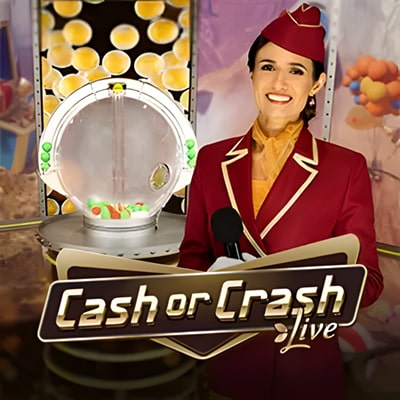
The objective of Cash or Crash Live is easy on the outside. You need to choose when to exit a growing multiplier before a secret “crash point” terminates the turn and takes your winnings for that level. Each game commences with players putting bets. A rocket then begins its flight, and a multiplier begins climbing from 1x. The ride has various phases. Before launch, a unknown crash multiplier is set for every stage, hidden from all players. As the multiplier rises, every player decides to hit “Cash Out,” fixing that multiplier on their stake, or to continue. If the rocket triggers the secret crash point prior to a player cashes out, they forfeit their wager for that phase. This cycle of hazard and profit occurs over multiple rounds. Players who survive grow their winnings step by step.
Dissecting the Stage Structure
View the game as a collection of distinct segments, each a new risk. Surviving a crash doesn’t remove you from the game. You advance to the subsequent stage with your built-up winnings secure, then begin the risk process from scratch on the following part of the rocket’s path. This framework is paramount. It generates a drama, with suspense that mounts as you progress. The announcer amplifies the drama, revealing how many players are still aboard the rocket as the multiplier reaches scary levels. Early stages often feature safe plays. Subsequent phases, with their big-winning multipliers, tempt you to gamble the profit you’ve already secured. This structure is the core of the game’s excitement. It creates a series of independent, critical decisions instead of only one.
From Low to High Risk: The Risk Escalation
Notice the colored trajectory the rocket travels. It’s a core part of the game’s visual lexicon. The opening segment is often a “Green Zone,” a safer phase where a crash is still on the table. Afterward, the rocket might enter an “Amber Zone,” a distinct signal that risk is increasing. The final stretch is the “Red Zone.” At this point, multipliers look their most attractive, but the chance of a crash is statistically at its maximum. These colors are more than decoration. They offer a quick visual for the risk level at each instant. They turn an theoretical probability become concrete. Knowing the game is deliberately informing you about increasing risk is a critical piece of strategic information.
Methodological Structures and Player Psychology
No strategy can overcome the fundamental randomness. But you can employ disciplined approaches to manage your funds and your emotions. The main conflict is a compromise. Do you guarantee assured gains, or shoot for explosive profits? Players often employ strategies like the “Fixed Cash-Out.” Here, you choose ahead of time to withdraw at a certain multiplier, say 2x, in every round. This seeks consistent, small gains. The opposite is the “Let It Ride” approach, where you gamble many phases for a shot at a massive win, acknowledging that crashes will happen. A more measured method is the “Percentage Bankroll” method, where you modify your bet size based on your existing gains. The key aspect, though, is in your psychology. Can you overcome the “greed factor” when the payout soars? Can you prevent disappointment after an initial failure? Your most powerful tool is establishing strict rules for yourself before the rocket even starts.
Frequent Errors to Evade
Look out for a few common errors https://cashorcrashcasino.com/. The most destructive is “chasing” a failure. This involves rashly raising your bet after a defeat, which goes against the system’s stage-independent structure. Another error is believing in the “hot hand” misconception, assuming a run of large ratios is likely to continue. Allowing the commentator’s talk or the moves of other participants divert you from your own predetermined strategy is common. Also, avoid misinterpreting the areas. The Amber and Red Zones are not tests to beat. They are signals that the hazard has spiked. Going into any phase without a clear goal converts the game from a session of decisions into a pure emotional rollercoaster. That journey rarely ends well.
Conclusion: A Harmony of Fortune and Decision
Cash or Crash Live is a compelling blend of sheer fortune and deliberate decision. Its workings are built to craft a narrative of rising stakes, fueled by a transparent RNG and livened by a engaging emcee. Determining success as a entertaining and potentially profitable game depends on several factors. It’s not so much about anticipating the uncertain and instead about comprehending how the game is built. It requires handling your funds with restraint and managing the mental inclinations the game masterfully triggers. By learning its phases, understanding its mathematical structure, and following a custom approach, you can alter your perspective. You go from puzzled guesswork to enlightened engagement in a exceptionally intense live game show.
The purpose of the on-air host and RNG
The presenter does more than talk. They determine the game’s emotional pace. While they can’t affect the result, they masterfully build suspense. They call out the climbing multiplier and offer live updates on what percentage of the crowd is cashing out at each level. That social cue can mess with your head. But remember, the host is separate from the game’s engine: the Random Number Generator (RNG). The crash point for each stage is set by a certified RNG the instant the stage begins. This assures fairness and total unpredictability. The host has no clue when the crash will happen. Their job is entertainment. The RNG’s job is certifiable fairness. This combination combines transparent live action with provably random results.
Mathematical Foundations and Variance
Let’s examine the numbers that drive the game. The crash point for each level is derived from a fixed probability distribution. Frequent, small multipliers such as 1.2x or 1.5x have a high chance of being selected. Very large multipliers can occur, but they are exponentially more rare. This system keeps the game balanced. The common, minor crashes fund the infrequent, massive possible wins. The RTP figure is a statistical percentage over millions of plays. In your single session, the fluctuations are dramatic. You’re not wagering against the house in a traditional way. You’re making choices against a hidden, random number. Keep these points in mind:
- Independent Stages: Every round’s crash point is an independent occurrence. A crash of 1.2x in round one gives no info about round two.
- No Predictable Sequences: The RNG eliminates any predictable patterns. Past crashes or big wins have no bearing on the future.
- House Advantage: The system incorporates a house advantage, as reflected in the publicly stated RTP from the developer.